


















"The stars are better off without us."
The Expanse redefined prestige television. It bridges the gap between hard science and high-stakes drama, where physics is unforgiving and politics is lethal. This is future history, written in blood and ice.
THE EXPANSE
The Industrial Soul of the Void
Physics as a Cruel Master
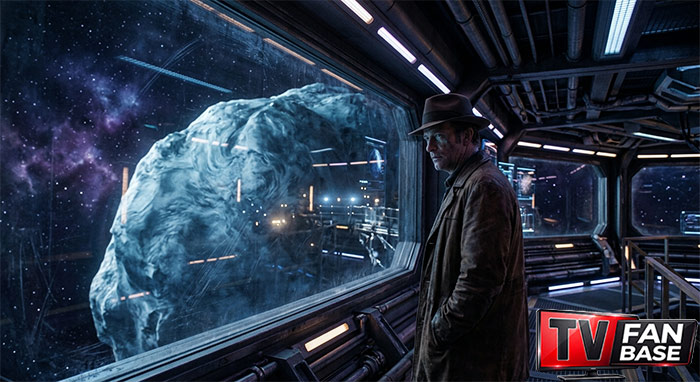
The Expanse rejects the sterile, magical tropes of classic sci-fi and offers an "industrial soul" of the universe. Here, ships are not sleek, effortless vessels, but massive fusions of steel, cabling, and ruthless functionality. Every frame emphasizes the Hard Sci-Fi nature of the story—from the rhythmic thud of magnetic boots on metal decks to the brutal depiction of Newtonian physics where every "flip-and-burn" maneuver has a direct, crushing consequence on the human body.
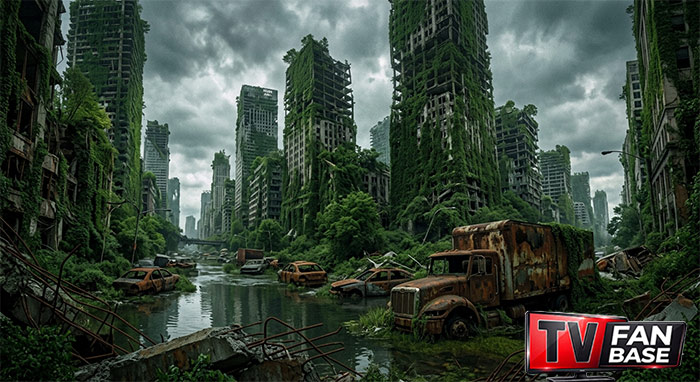
This is a world where resources outweigh ideologies, and water or air are more valuable than gold. The visual language perfectly captures the contrast between the clean, arrogant minimalism of Mars, the overcrowded and decaying Earth, and the grimy, claustrophobic reality of The Belt. This meticulous focus on detail and the laws of physics gives the audience a sense that they aren't watching a fantasy, but a plausible future of humanity that is simultaneously fascinating and terrifying.
Moral Architecture & Geopolitics
The tragedy of The Expanse lies in the realization that even in the vastness of the solar system, humanity cannot escape its own tribalism. The series doesn't offer a simple battle between good and evil, but a complex triangle of power: a wealthy but bureaucratically bloated Earth; a militaristic and technologically superior Mars; and the exploited Belters, treated as disposable labor without basic human rights.
Through characters like Chrisjen Avasarala, we see that morality is often a casualty of political pragmatism. Every revolution has a steep price, and every act of heroism is stained with the blood of those caught in the crossfire of geopolitical games. It is a grim study of how power shapes people and how survival becomes the only currency that truly matters in the dark.
Critical Context Matrix
Performance Analysis
Simultaneously terrifying and loyal. A masterclass in subtle acting and psychological depth.
Authority personified. Her voice and presence command the literal gravity of Earth itself.
Righteous fury. Captures the raw resilience and deep-seated pain of the Belter soul.
The noir anchor. A weary, cynical investigator in a universe losing its sanity.
The moral compass. Evolves from a reluctant leader to a galactic icon.
Martian might. Combines sheer physical power with a complex heart.
The Audio Landscape
Clinton Shorter’s score is industrial, ethnic, and haunting. It masterfully uses silence as a weapon to highlight the spiritual void of space.
🔊 Dolby Atmos 7.1 Surround
📽 2.39:1 Cinematic Aspect Ratio
Behind The Scenes
Belter Language: Linguist Nick Farmer developed a functional Creole. Physics First: NASA scientists verified the orbital mechanics shown on screen.
Cultural Impact
The #SaveTheExpanse campaign remains the most successful fan-led revival in TV history, leading Jeff Bezos to personally save the series.
Seasons Ranked
The perfect conclusion to the Caliban's War and the opening of the Ring Gates.
Eros, Bobbie Draper's introduction, and the peak of Martian-Earth tension.
Personal stakes and the devastating Nemesis Games arc. Marco Inaros is legendary.
Establishment of the world through the lens of a detective mystery.
A short but explosive finale. Tight pacing and emotional pay-offs.
The "Western" on Ilus. Visually stunning, but slightly slower pacing.
Why you'll love it
- ✔ Unrivaled Scientific Accuracy
- ✔ Deep Political Geopolitics
- ✔ Stunning Visual Effects
Worth Knowing
- ❗ Slow Burn Start (4 Episodes)
- ❗ Dense, Unforgiving Lore
- ❗ No Narrative Hand-holding
TVFanbase Weighted Audit
Recommended for You